
The best advice someone gave me for the first few weeks with a newborn was simple: Survive.
Forget about all of your expectations. Your goal — your only goal — is to keep your baby alive and you and your partner sane. That’s it. It’s going to be hard and there’s nothing you can do to change that.
You become spoiled in the hospital without realizing it. With a press of a button, within seconds, the charge nurse is there to help you change a diaper, pacify an inconsolable baby, or alleviate any concern you might have at the moment.
And then, suddenly, you’re at home and it’s the middle of the night, and you’re trying to soothe the most illogical creature in the universe, who is simultaneously too hungry to eat and too exhausted to sleep, with the only resources at your disposal your frayed nerves, a dog-eared copy of What to Expect the First Year, and some half-remembered bit of folk wisdom that’s probably outdated and dangerous.
And it’s in those moments that a sobering realization begins to sink in: There’s no going back. This is forever.
The Parent Trap
I became a father at age 33.
Within the grand scope of history, this would be considered fairly late in the game. However, within the context of my generation, it makes me an outlier for very different reasons.
In 2024, the U.S. fertility rate dropped to a historic low, a decades-long precipitous decline that’s only accelerated in recent years. In 1993, 60% of 30- to 34-year-olds had at least one child; in 2023, that percentage for the same age group had dropped to 27%.
Part of the decline stems from the fact that married couples are far more likely to have children together than non-married couples, and people are choosing to get married much later in life than previous generations. In 1980, the average age of a first marriage was around 23. In 2023, it was 32.
But it’s more than just aging marriage rates. According to a Pew Research report, 47% of U.S. adults under 50 now say they’re unlikely to ever have kids — up from 37% in 2018. That’s a huge leap to have been made in just five years.
Obviously, there’s a whole host of sociological, personal, and economic factors at play here. Of that 47% of U.S. adults who said they’re unlikely to have children:
- 57% said they “just don’t want to”
- 44% said they “wanted to focus on other things”
- 38% said they’re “concerned about the state of the world”
- 36% said they “couldn’t afford to have/raise a child.”
A brief word about the price tag of having children in America: With insurance, the average out-of-pocket cost of care during a healthy pregnancy and childbirth is around $7,000.
Want both parents to continue their full-time careers after a baby? Good luck. The average cost of childcare in my state is $1,277 per month — or 60.6% more per year than in-state tuition for a four-year public college. The true cost of raising a child from infancy through age 17 is estimated to be between $284,594 and $310,605.
Then there’s this most dispiriting statistic: Happiness and marital satisfaction appear to decline over time among people who have kids versus those who don’t. According to research conducted by the Gottman Institute, 67% of couples become “very unhappy” with one another during the first three years of their baby’s life — compared to just 33% who “remain content.”
So, with all that said, why the hell would anyone want to have kids?
Why I Was Reluctant To Be a Father
For most of our marriage, I was indifferent toward fatherhood.
After we got married, we thought we’d spend a couple of years figuring out the whole marriage thing and enjoying each other’s company before trying to get pregnant. Our roadmap included having kids, but it always felt like something that would happen eventually at some indefinite point in the future.
Then, before we knew it, five, six, and then seven years had passed. Mindful of the ever-increasing odds of a risky pregnancy the longer we waited (and a desire to not be deep in our fifties at our child’s high school graduation), Shannon chucked the birth control pills, and we began our era of carefree “let’s-just-see-what-happens” sex.
But after a fruitless year and a half trying to conceive (and over a decade of incredibly painful irregular periods), Shannon was diagnosed with endometriosis, a chronic disease that can impact fertility. Following a laparoscopy surgery in March 2023 that resulted in the removal of one of her fallopian tubes, we were told the following six months would be our best shot at conceiving before the scar tissue returned.
As any halfway-decent screenwriter knows, if you want to ramp up the urgency in your film’s plot, then you better add a time constraint. And, thus, we started having a lot of sex. At all times of the day. In countries all over the world. Which was great.
Yet while basking in the startling post-orgasm clarity that can only come from 100% birth control- and condom-free lovemaking intended for procreation, I’d worry if we’d fully accounted for everything in our lives that’d be irrevocably changed by adding a small helpless human into the mix.
Things like:
- Travel: A not-insignificant part of our relationship involved planning, budgeting, and embarking on international adventures designed to produce envy-inducing Instagram posts. Was I really prepared to swap out my social media persona for “insufferable proud parent?”
- Money: Wait, raising a kid costs how much? Holy shit. Is it too late to become a naturalized citizen of one of those Scandinavian countries that rewards parents instead of punishing them?
- Sleep: Based on our friends’ experience, having a baby looked like being trapped in a perpetual state of jet lag, everyone’s favorite part of international travel.
- Home Renovations Needed to be Complete Before Baby’s Arrival: [see Money above]
- Faith: Oof. Would we have to start regularly attending church again?
- Growing Threat of Political Extremism and Sectarian Violence: You saw Alex Garland’s Civil War, right? I don’t think they make bulletproof vests that double as baby carriers.
- Poop: I’d gone my whole life without having to wipe another person’s ass. A not-insignificant part of myself wanted to keep it that way.
While these intrusive thoughts ran the gamut from petty to existentially dread-inducing, as Shannon lay back in the aftermath of our coupling with her hips propped up by a pillow — because she’d heard that might increase the chances of implantation — I’d find myself incapable of stemming their onslaught.
But surely if those teens on MTV could manage it, then surely Shannon and I were more than capable.
And then there was the fear of losing us.
After nearly a decade as a couple, Shannon and I had built a robust life defined by comfortable rhythms and punctuated by exhilarating bursts of adventure. We’d both gone to therapy separately and learned to navigate each other’s moods, temperaments, and expectations. Our sex life was great, and we’d established a home in a city and state that we love.
In short, our relationship was in the healthiest place it’d ever been. Why blow it up by introducing an agent of chaos into the mix?
And then it happened.
On August 28, 2023, the same day I started a new job, Shannon peed on a pregnancy test and received that elusive “+” result.
A few weeks earlier, apparently, one of my tadpole-like spermatozoa had successfully navigated the hostile, battle-scarred No Man’s Land of Shannon’s uterus, bumped into one of Shannon’s shy eggs and, playing it cool as if it was an accident, was like, “Hey, do you consent to getting this party started?”
And her egg was like, “Okay.”
What the First Days of Parenthood Really Feel Like
After an arduous labor that necessitated a C-section, Florence Imogen Terrell entered the world on Cinco de Mayo (“Congrats on your taco baby,” the cute nurse said with muted enthusiasm).
Nothing radically alters your sense of self more dramatically than holding your child in your arms for the first time. As Anne Lamott writes in Operating Instructions: A Journal of My Son’s First Year,
“There really are places in the heart you don’t know exist until you love a child.”
In the span of a heartbeat, you cease being the main character. You’re deregulated to the role of supporting actor for the rest of your life.
J.R.R. Tolkien, creator of Middle-earth and The Lord of the Rings, coined the term “eucatastrophe” to describe a sweeping and unprecedented turn of good fortune that interrupts a story (in contrast to a “catastrophe”).
Experiencing new life being drawn up from my wife’s womb and held aloft, smeared in blood and viscera, was an eucatastrophe at the most intimate scale, an apocalypse in miniature, the end of one world and the literal birth of another.
The next few days in the hospital passed in a hazy, dreamlike blur. You learn how to properly swaddle, change a diaper, and feed her. You’re shocked at how hard the nurse thumps your baby’s back to show you how to burp them correctly. You’re woken up multiple times every night by apologetic specialists coming in to check weight and run tests.
But in the quiet moments, when it’s just you and your partner, and your baby is nestled on your chest, only half-aware of its existence outside the warmth of the womb, it starts to sink in how irrevocably your life has changed. And nipping on the heels of that realization is the bewildering realization that maybe change is good.
The Recovery Ward in the hospital’s Birthing Center is a safe place, a pocket universe sealed off from the stresses of the outside world. But, inevitably, it comes to an end. A wheelchair is rolled into the room, and you suddenly realize how little you know about strapping a baby into a car seat.
And then you’re home.
Shannon (or Overcoming the Trials of Postpartum Anxiety, Rotavirus, and Breastfeeding)
Keeping a newborn alive forever changes your relationship with time.
On average, a newborn needs to feed at least eight times per day. Therefore, in the early weeks of parenthood, you’re locked in a Groundhog Day-esque time loop that resets every three hours.
For a newborn, that three-hour block of time consists of sleeping, eating, and a half-hour or less “wake window.” For parents, that same time block involves changing diapers, feeding the baby, cleaning pump parts, engaging the baby’s developing senses, and storing and/or thawing pumped milk — all while attempting not to drown amid the rising tide of “everyday” tasks like laundry, washing dishes, and feeding yourself.
It’s very physically, emotionally, and mentally taxing, and exacerbated by the fact that this is the first time you’re doing all of this all at once and all the time. And that’s not taking into account all of the brand-new fears and anxieties that crop up as you watch your newborn dreamlessly sleep in their bassinet. Things like:
Is she sleeping too little? Too much? Why hasn’t she pooped today? Is that poop color normal? Is the swaddle too tight? Too loose? What’s the general consensus on pacifiers again? Is she not eating because she’s tired? Is she not sleeping because she’s hungry? Is it too warm in the room? Too cold? Is it normal for her to hiccup this much? Should we wake her up or let her sleep? Is she breathing? Why won’t she stop crying? Are we bad parents? What did we get ourselves into?
These kinds of questions and concerns hit Shannon far harder than they did me. From recovering from the physical trauma of childbirth to the massive biochemical disruption that follows in pregnancy’s wake, it’s no secret that the early days of parenthood inherently place a higher demand on a woman’s mind and body.
After a week of particularly bad days in which Shannon struggled to sleep and leave Florence alone, we made the executive decision to contact Shannon’s primary care physician to get a prescription to help alleviate postpartum anxiety (a close relation to postpartum depression).
The difference for Shannon was night and day, and an illustrative reminder that you do whatever it takes to preserve your mental health and there’s no shame in relying on antidepressants to do so.
[Editor’s Note: It should probably be clear by now, but if you were expecting another “crunchy” blog extolling the virtues of naturopathy as it relates to pregnancy, childbirth, and parenthood, you might want to look elsewhere].
Another hurdle we had to overcome early on involved Shannon’s milk supply. Shannon was wary of breastfeeding during her pregnancy, but — surprising herself — took to it naturally after Florence was born. Unfortunately, Shannon’s milk apparently lacked a certain fatty enzyme that kept Florence from feeling full.
So, Shannon started pumping exclusively so we could fortify her milk with formula via bottle feeding. This development was actually a blessing in disguise as I could now take a few nighttime feeds and give Shannon a break. After about three months, we shifted completely to formula (the organic European Kendamil brand) and haven’t looked back.
There’s a lot of pressure and shame associated with breastfeeding, bottle feeding, and formula. Once again, just do what you have to do. We bought a Baby Brezza (basically a Keurig for baby formula) and it made our lives so much easier.
And then, around the time we were starting to get the hang of things, Shannon came down with a case of Rotavirus so bad it necessitated a trip to the ER and an overnight stay in the hospital. If that wasn’t enough, Shannon had to quarantine herself when she got discharged because it was possible she was still contagious and Rotavirus can be deadly to newborns.
And that meant I was on Florence duty 24/7 for a full week as Shannon recovered. And wow, what a paradigm-shifting experience that I think every father should have to endure to fully appreciate the trials of motherhood.
Because one aspect of parenthood no one tells you about is that it allows you to fall in love with a completely different version of your spouse. To witness Shannon develop into a mother has been one of the highlights of my relationship with her. Entirely new avenues of devotion, intimacy, and commitment have opened up between us since Florence entered the picture.
It’s easy to mourn our life before. Everything is a little more complicated now. Our attention more divided. Our affection less singularly focused. A little more sleep-deprived. Our freedom more constrained. But I wouldn’t give up any of these changes if it meant sacrificing any of the transformational growth we’ve undergone as a result of them.
We worried about losing ourselves to parenthood. Losing our autonomy as a couple. But there are new parts of our relationship to love. New qualities to get turned on by. New challenges to overcome. New opportunities to become more patient, more vulnerable, and more resilient.
Life with a newborn is a crucible, a gauntlet, a refining experience that leaves no part of your life unchanged. And that’s the joy. To fall in love with a new version of your partner as you yourself are transformed by the fire and the flood.
How to Have Sex After Having a Baby
Even for women who’ve had C-sections, intercourse is generally prohibited for at least six weeks after birth to give the woman’s cervix time to heal and close. Most couples probably won’t find this period of abstinence very difficult to navigate as sex will likely be the furthest thing from your sleep-addled minds.
At the same time, I know from several new parents that this interruption combined with the lifestyle changes necessitated by this new season can make “getting back into the swing of things” very difficult. A cursory examination of research bears this out beyond the anecdotal: On average, couples appear to have less sex after having kids.
Aware of the challenges, Shannon and I took an unusual step to keep the spark alive during our period of abstinence: We would periodically set aside some time throughout each week to make out and fool around like horny teenagers.
I know it sounds crazy, but those daytime interludes of cuddling, kissing, and touching helped to ground us in the reality that — despite the exhausting transition to parenthood — we could still engage with one another on a level that went beyond “mom” and “dad.”
When Shannon was cleared for sex after her six-week appointment, we — quite literally — eased into it. Shannon picked the night and set the pace, and our first attempt at “real sex” in nearly two months unfolded slow, clumsy, and a little awkward, soft echoes of our wedding night — only this time with a tiny person asleep in the bassinet next to our bed.
Shannon was self-conscious about her “new” body — C-section scar, distended belly, and leaky breasts — and while pregnant she told me one of her biggest fears was losing her sexual autonomy after giving birth. Taking the hint, that meant a lot of extolling the sexiness of her postpartum body when she least expected it.
Also, you know what’s really sexy? A partner who takes the initiative to ease the burden of parenthood that traditionally falls heaviest on new mothers.
Shannon and I have never held a transactional view of sex (we think it’s super unhealthy). But, I’d argue that feeling supported by an engaged partner who’s constantly on the lookout for opportunities to serve helps alleviate the mental load that would otherwise be preoccupied with a never-ending to-do list (and make room for other leisurely indulgences like, you know, sex).
While the quantity of sex definitely decreased, I’d say — and Shannon agrees — that the quality of our sex life has actually improved since having Florence. This surprising outcome wasn’t a happy accident. It required a lot of self-awareness, intentionality, and effort on our part — and, to be fair, literal years of hard work to establish an open-minded, pleasure-first sex life (you can read more about that process in our previous articles on marriage).
But the concentrated intentionality coupled with a shared mutual appreciation of our efforts as new parents and a limited amount of opportune time added a whole new layer of intimacy and desperation to our sex in the wake of Florence’s birth.
Also, if you’re doing the co-parenting thing well, it’s highly unlikely your libidos and free time are going to sync up every time you feel in the mood. In that case, gift each other the time and space to have some alone time while the other looks after the baby (this practice can also go a long way in restoring some of that sexual autonomy).
I don’t want to paint too rosy a picture here of post-baby marital bliss. We still get snappy with one another, it’s difficult to be spontaneous, and our plans to have sex are frequently derailed by our own sundowning fatigue and Florence’s apparent innate ability to wake up and start crying the moment the foreplay gets hot and heavy.
But we take these challenges in stride (and with a healthy dose of humor). So, take it from us — the sacrifice of your sex life and sexual identity on the altar of parenthood doesn’t have to be a foregone conclusion or tragic inevitability.
However, I want to be very clear that a low sex drive several weeks and months after birth is completely normal (and not at all anybody’s fault). In fact, it’s pretty common for libido — regardless of gender — to tank postpartum due to a variety of reasons. And, for some women, breastfeeding can increase vaginal dryness and discomfort during sex.
Therefore, it’s absolutely vital to go at your own pace, and not to feel bad if things aren’t quite like they used to be for some time (if ever). Far more important than rebuilding your sex life is learning how to best support one another during what is arguably the most significant shift in your relationship dynamic you’re likely to ever experience.
And this probably won’t involve a whole lot of sex. But what it will require is an absurd amount of communication, empathy, vulnerability, patience, and grace. So any assumptions or expectations regarding sex post-baby needs to start there.
The Joy of Losing Your Freedom (or A Man’s Search for Meaning)
In 4,000 Weeks: Time Management for Mortals (one of the most important books I’ve ever read), philosopher Oliver Burkeman expounds on what he calls the “inevitability of settling.”
Settling is often maligned in career and relationship advice (“Don’t settle for less than you’re worth!”), but, as Burkeman puts it, you will always settle — because you don’t really have a choice. Even deciding not to settle is a form of settling.
A healthier approach rethinking settling as any decision that closes off the possibility of potentially better alternatives. (The original Latin word for “decide” is decidere, after all, which means to “cut off”). For most, I suspect, this redefinition won’t make settling sound any more appealing — but let me explain. If you can wrap your head around this concept, then it will change your life.
Using marriage as an example, Burkeman goes on to say that “it’s precisely the fact that getting married forecloses the possibility of meeting someone else that makes marriage meaningful.” He calls this the “renunciation of alternatives,” or the discovery of the joys of missing out in contrast to the fear of missing out (or FOMO).
In other words, it’s the very act of making a commitment in the face of so many other options that gives the choice its meaning.
[Editor’s Note: There’s a related theory in quantum mechanics that proposes that our ability to perceive reality and move forward in time is that which collapses all of reality’s endless branching paths into a single shared experience. I don’t recommend thinking about this as you lay awake at night trying to fall asleep].
Quantum mechanics aside, what does all of this have to do with becoming a father?
There’s a version of our life where Shannon and I don’t become parents — either by conscious choice or medical reasons. And within that branching life path, we have more disposable income, more freedom, and more mobility to travel and do what we want when we want.
We would have a fun, adventurous life that would undoubtedly be the envy of our Instagram followers.
But we’ve settled on a different path, one that currently involves dirty diapers, drool-soaked shoulders, and the complete inability to watch an episode of television in one sitting.
In every aspect that matters, it was the very act of consciously whittling all of my available options down to a single course of action that gave my life significance and purpose. Width of experience doesn’t have shit on the depth of experience. Freedom is overrated.
When I held Florence in my arms for the first time, my quantum reality began collapsing in on itself. Certain opportunities closed themselves off. Some things became harder. Nothing became easier.
But at that moment, I wish I could’ve traveled back in my time and told that anxious and reluctant version of myself from a year prior that everything was going to be okay. As in most respects, the fear of the thing was worse than the thing itself.
And for those parts that do kind of suck right now? Yes, it’s hard sometimes. In completely unexpected ways. But hard doesn’t mean bad. Or wrong. And the way Florence looks at me when I get home from work, the way her eyes brighten and a smile splits her face as she ducks her head into Shannon’s shoulder as if she’s suddenly struck with immeasurable giddiness and shyness at the same time? Yeah, it’s fucking worth it.
But something else was happening when I held Florence for the first time. As multiple potential branches of my life were being pruned from reality, the shoot of her life’s potential was sprouting through the multiverse, twisting and spiraling outward in a vibrant garden of possibility and inevitability. A garden she will one day prune with her own decisions to settle.
Florence, God willing, will outlive me.
She is my afterlife.
And I will forever be her father.
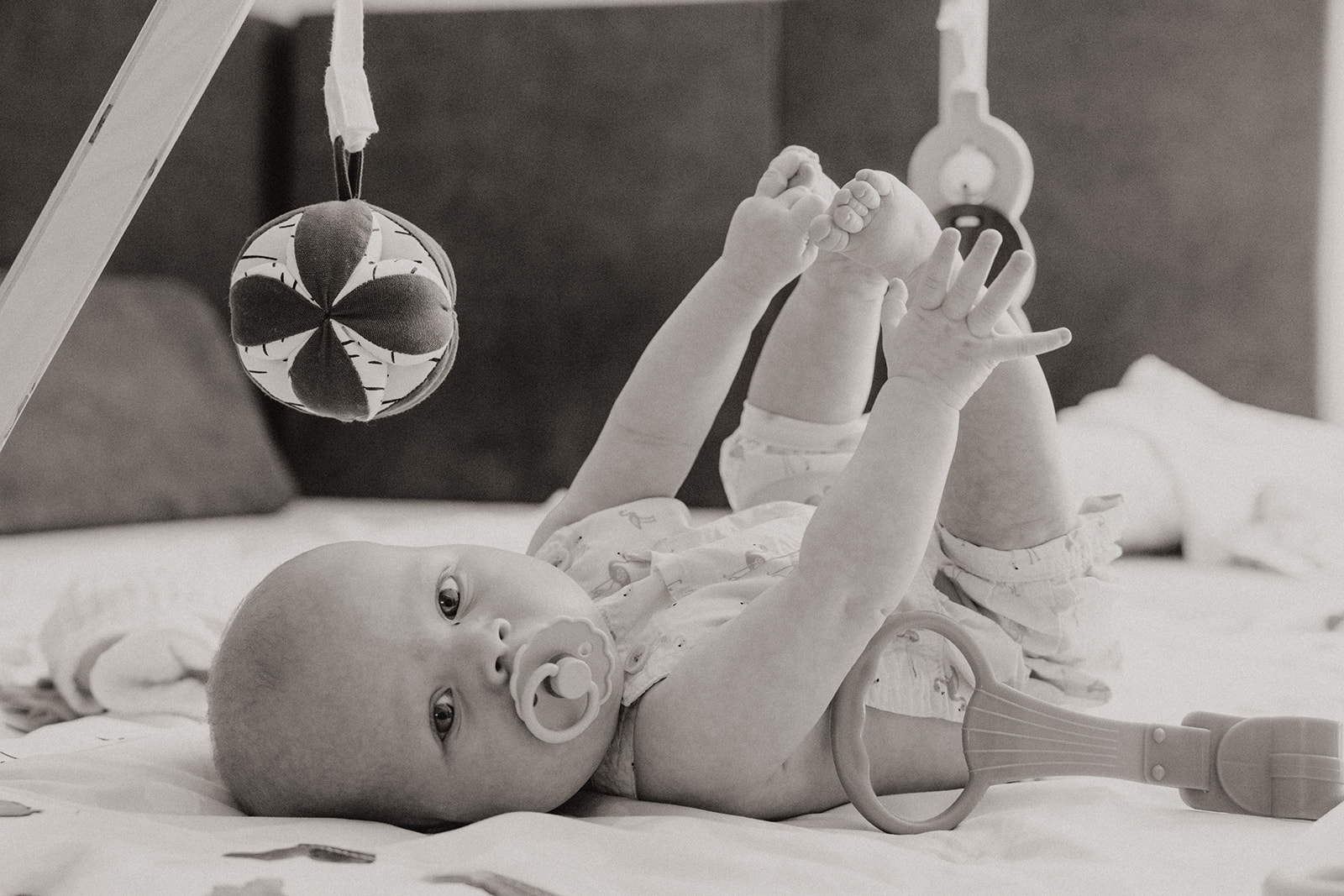
Addendum: Resources
Books
Expecting Better and Cribsheet — Emily Oster: I know people have strong opinions on these books (like everything involving parenthood), but as a guy who didn’t know much about pregnancy, breastfeeding, sleep training, and milestones, I found Oster’s stat-focused and level-headed approach to every topic she covered incredibly illuminating and non-anxiety inducing.
What’s Going On In There? — Lise Eliot: A very accessible and helpful exploration of how a child’s brain, senses, and consciousness develop from birth to age five.
The Anxious Generation — Jonathan Haidt: Every parent should read this book as early as possible as it concerns the mental health impacts of the “phone-based childhood.”
There’s No Such Thing As Bad Weather — Linda McGurk: A Scandinavian approach to parenting with an emphasis raising resilient kids who aren’t crybabies.
Sex Talks: The Five Conversations That Will Transform Your Love Life — Vanessa Marrin: The most accessible and helpful guide to having better conversations about sex with your partner.
Food
Baby Brezza Formula Dispenser — An absolute lifesaver. Warm formula ready to drink by the ounce in seconds.
Philips AVENT Bottle Sterilizer and Dryer — You’ll save so much time and money using this bottle sterilizer as opposed to using your dishwasher. In the early weeks, we were running it multiple times per day.
BOLOLO Portable Milk Warmer — A super convenient on-the-go formula/breastmilk mixer and heater. Also could possibly work for hot chocolate? Pairs well with Termichy Stackable Formula Dispenser.
Little Remedies Gas Drops — Florence had some digestion issues early on, and this stuff helped her out.
Play
LOVEVERY Play Gym — Pretty much the only at-home entertainment your baby needs for the first six months.
Frida Baby Get-A-Grip Teether — Florence awards this doo-hickey five stars.
Rattle Teether — Shaking this and lowering it slowly down to Florence’s waiting hands gets a big reaction.
Crinkle Baby Book — Florence was particularly taken by the images of the radish and the rabbit.
Sleep
Egg Light — Great portable non-harsh light source
The Ollie Swaddle — The only swaddle Florence would sleep in for a while.
Cowiewie Bassinet Crib — This is where Florence sleeps.
Babyletto Convertible Crib — This is where Florence will soon sleep.

 Instrument of Mercy
One thought on “The First Four Months: Confessions of a Reluctant Parent”