
I read too many books in 2024.
This may sound like a rather surprising admission, especially when one considers that my wife and I welcomed our first child this year.
But it turns out that attempting to bottlefeed a fussy baby at one in the morning is the perfect time to queue up an audiobook. For the first time in my life, the amount of books I read in a given year crossed the triple digital mark. And, yet, I feel no satisfaction in that fact. I actually feel pretty burnt out.
We live in a world overflowing with content — there’s just too much to read, too much to watch, too much to play, too much to experience in one life. As a result, we no longer allow a particular piece of media — be it a book, movie, or television show — the time to resonate with us, nor grant ourselves the opportunity to breathe before moving on to the next thing.
When it comes to books, I found myself too often reading (or listening) not out of sheer enjoyment of the experience but simply to get to the next book on my TBR pile. In this way, the joy of reading became another act of disposable consumption.
In Hartmut Rosa’s The Uncontrollability of the World, the German philosopher argues that in our attempt to make our lives as controllable as possible, our natural disposition toward the world is aggression. We’ve essentially rendered everything that holds the potential for meaning and purpose in our lives — spirituality, parenthood, sex, marriage, recreation, career aspirations — into quantifiable to-do lists to be conquered and mastered.
I think, at least personally, the joy that reading once held for me has been replaced by a mad sprint to consume as much as possible to meet some arbitrary goal or attain some kind of identity.
Therefore, next year, my goal is to read fewer books, prioritize reading older (and longer) books, and do my best to avoid getting caught up in the marketing hype of The Next Big Thing.
But I know you’re not here to read about my philosophical and existentiantal angst regarding my reading life. Despite my misgivings and frustrations, I still — obviously — read a lot of great books this year. Some all-timers, in fact. Without further ado, here are the best books I read this year — divided into fiction and nonfiction lists.
Best Fiction I Read in 2024
Lonesome Dove — Larry McMurtry
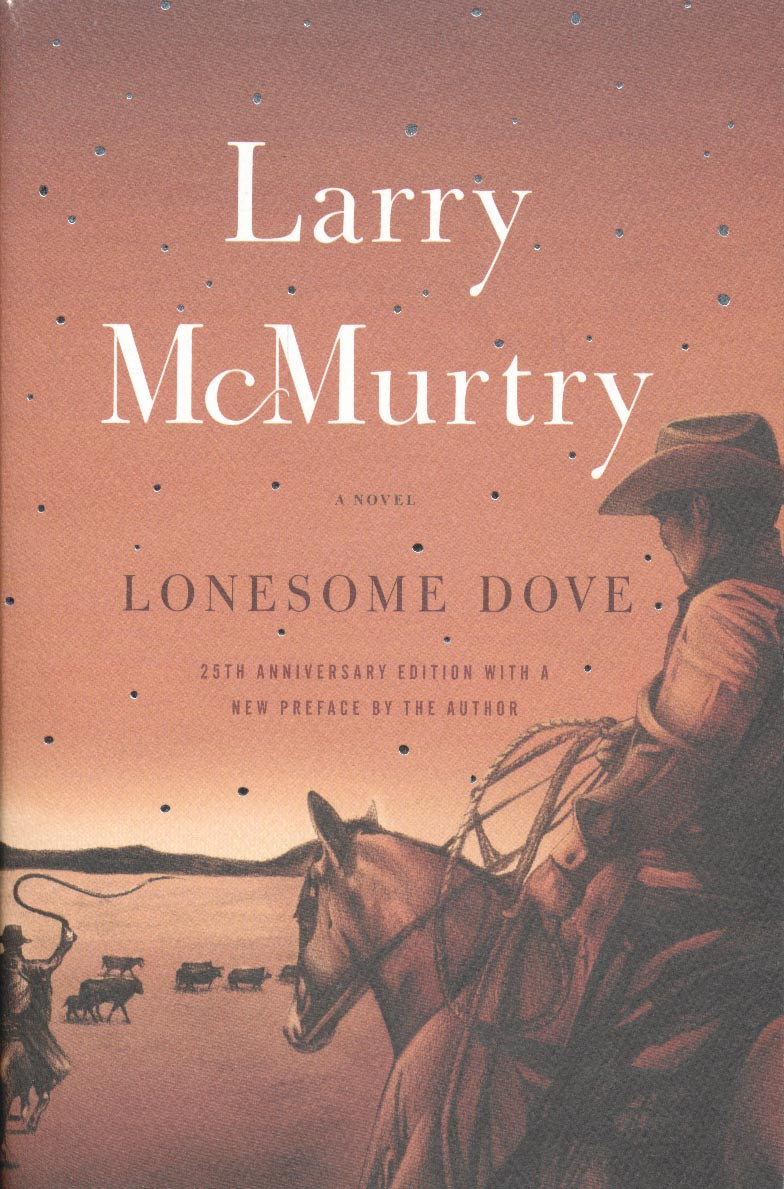
Set in the late 1870s, Lonesome Dove is, simply put, about a cattle drive from the Texas-Mexico border town of Lonesome Dove to the sweeping plains of Montana. It’s a journey fraught with raging rivers, dust storms, locusts, barren deserts, horse thieves, bandits, blizzards, grizzly bears, and marauding Native Americans.
Written in matter-of-fact prose, this 850-page epic sprawls and twists through multiple narrative strands, side quests, and character arcs. It’s packed with romance, adventure, survival, horror, humor, tragedy, and features some of the most fully realized primary, secondary, and tertiary characters I’ve ever encountered in fiction.
Lonesome Dove is one of those novels I believe every book lover should read. Yes, it’s long, but there’s just something about being immersed in a well-written and dense novel with a thick spine that almost feels like an act of defiance in a culture that’s made reading another act of disposable consumption. Lonesome Dove, without a doubt, is one of the most soul-stirring, majestic, and enthralling novels I’ve ever had the good fortune to experience. It’s a book so grand and rich, I mourn it took me this long to finally read it.
Lincoln in the Bardo — George Saunders
After amassing critical and commercial success as one of America’s greatest living short story writers, George Saunders decided to tackle long-form storytelling with his debut novel, Lincoln in the Bardo—delivering, in the process, the most unique and brilliantly realized works of fiction I’ve come across in years.
Lincoln in the Bardo is inspired by a kernel of historical truth: In the aftermath of his eleven-year-old son’s death of typhoid fever in the first year of the Civil War, a grief-stricken President Abraham Lincoln visited the boy’s body in the crypt numerous times in the middle of the night.
From there, the story takes a fantastical turn: The graveyard housing the crypt is home to dozens of ghosts—including Lincoln’s son, Willie—who exist in a state of perpetual purgatory not quite aware they’re dead and in need of “moving on.” However, the most immediately distinguishable feature of Lincoln in the Bardo is that it’s written in the style of an oral history — almost Greek chorus-like — which means the entire story is told through fragmented pieces of dialogue and real-life (and fictional) historical accounts by the ghosts themselves.
Lincoln in the Bardo is astounding. It’s weird, wacky, profane, hilarious, and bursting with imagination, philosophy, and meditations on the meaning of life, death, grief, and love. It’s a phantasmagorical American odyssey by way of Dante’s Inferno and C.S. Lewis’s The Great Divorce.
James — Percival Everett
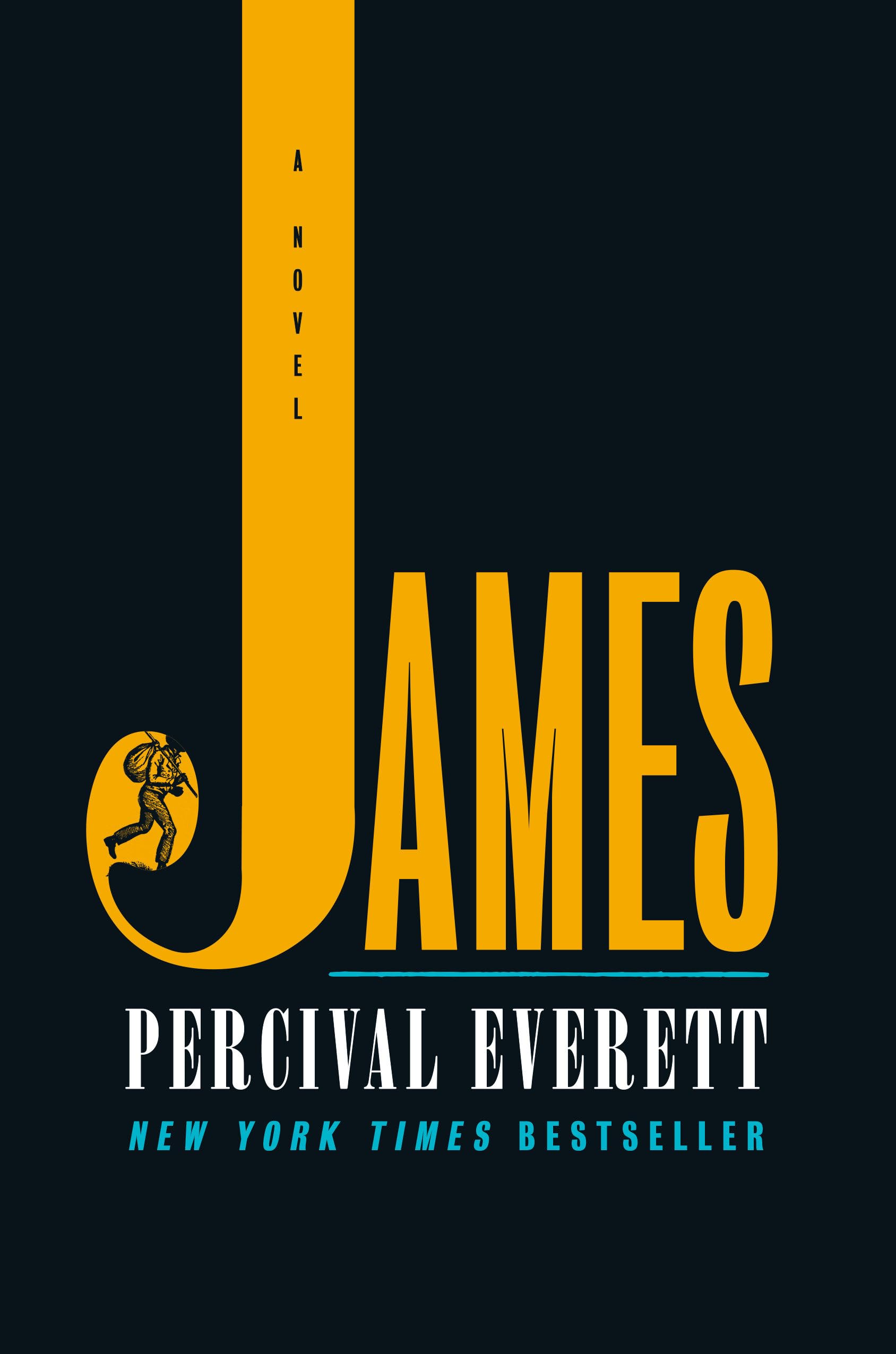
The setup for James almost sounds like a gimmick — it’s a retelling of Mark Twain’s The Adventures of Huckleberry Finn written from the perspective of Jim, the escaped slave who accompanies Huck on his journey down the Mississippi River.
Written in clear and accessible prose and propelled by an episodic narrative structure, James often reads like a thriller and avoids the pretentious literary stylings so common in the genre. Percival Everett also does a masterful job blending tone — despite the intensity of the subject matter, there were multiple times when I laughed out loud.
Funny and bleak, adventurous and timely, James is a brilliant reimagining of an American classic that ranks as one of the very best books of the year. It’s both a respectful homage and instructive critique of the source material, while also daring to tell its own unique story.
Intermezzo — Sally Rooney
Layered with acute psychological insight, complex emotional drama, and moving analyses of grief, Intermezzo is Sally Rooney’s most accomplished and mature novel to date.
Intermezzo follows two brothers, Peter and Ivan, who live in Dublin. Peter is in his mid-thirties, a successful civil rights lawyer, and is torn between two women: Sylvia, the love of his life who lives in chronic pain after an unspecified accident, and Naomi, a college student ten years his junior with an OnlyFans account. Ivan is in his early twenties, a chess prodigy, and he finds himself romantically entangled with Margaret, a woman in her mid-thirties coming out of a turbulent marriage.
Intermezzo is a grand piece of modern literary fiction. It’s epic and intimate, sexy and heartbreaking, and yet filled with grace and ruminations on what it means to live life as a good person in the modern world. Every time I opened this novel, I was completely immersed in the characters’ struggles. I found myself gripped by how every conversation, romantic interlude, argument, and side-eye glance revealed a battlefield of repressed emotions, second guesses, and idealistic naivety.
Ohio — Stephen Markley
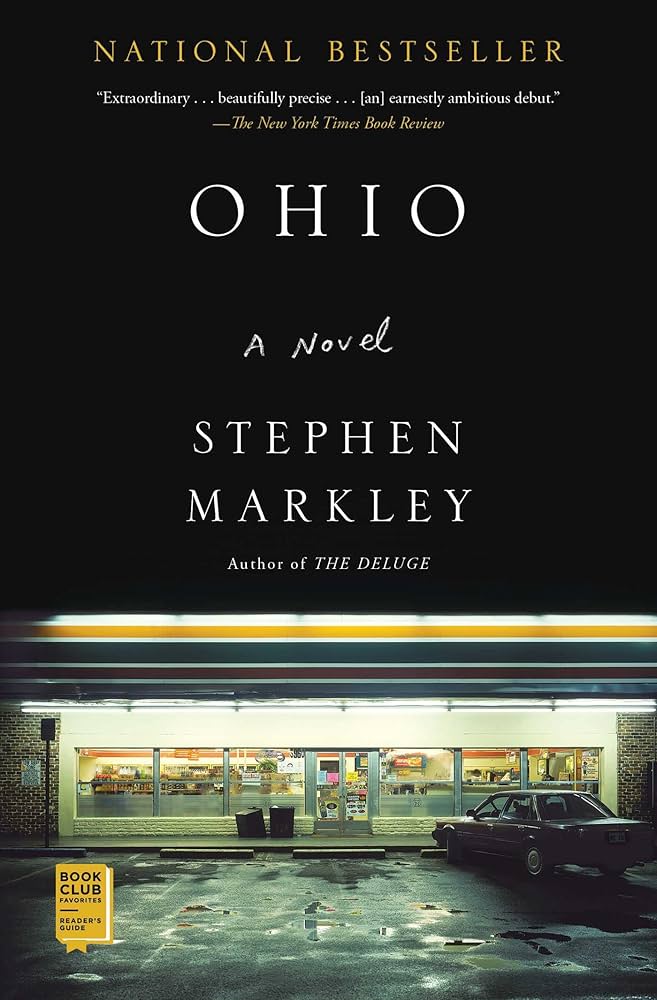
An absolutely stunning depiction of America in decline, Ohio is a brilliantly plotted and shocking novel about four former high school classmates who converge on their hometown over the course of one fateful night.
Constructed around four novellas in which we follow each character’s journey through the same night, flashbacks to their high school years present alternating perspectives on consequential memories from their past that also impact their interactions (and consequences) in the present. Ohio builds to a shocking act of retributive violence that I didn’t see coming. Then it doubles down on the surprise by revealing a “hidden” murder mystery plot in the novel’s coda that’s been lingering on the periphery of all of the characters’ narratives.
Ohio, in a nutshell, is a story about disillusionment — disillusionment with progressive idealism, the American dream, Evangelical Christianity, social activism, blind patriotism, and post-9/11 militarism. I’ve read a lot of books that attempt to “explain” the rise of cultural nihilism, political extremism, Christian nationalism, and social apathy, but this is the first book I’ve read that actually “gets it,” and Stephen Markley achieves this by never commenting on it directly, just subtly intertwining the novel’s themes with the characters’ post-high school experiences. No novel felt more depressingly relevant in 2024.
Shark Heart — Emily Habeck
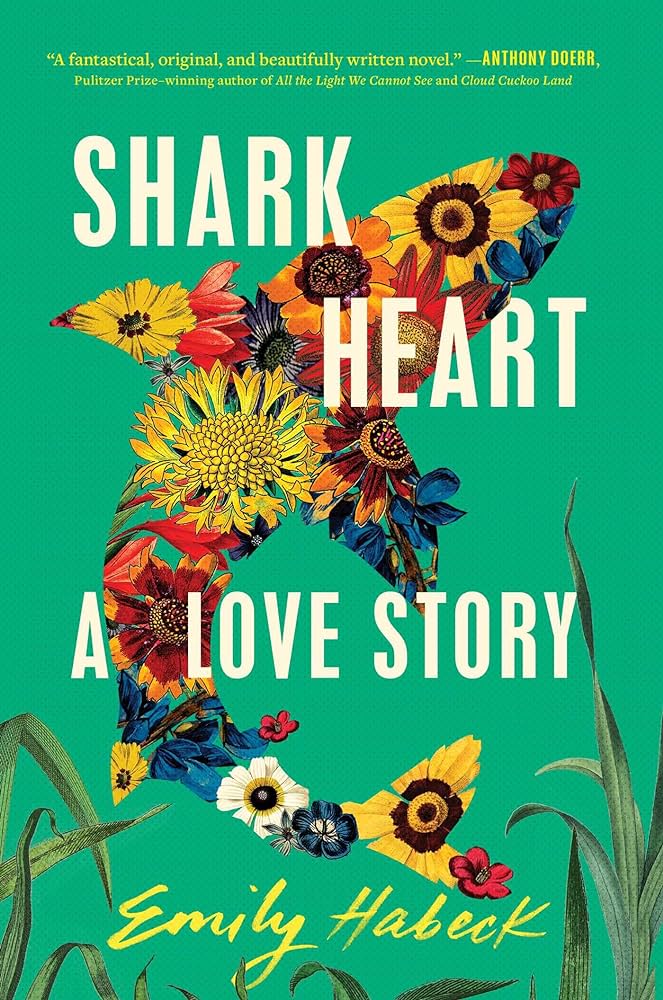
A beautiful, moving, and heartbreaking portrait of marriage and parenthood, Emily Habeck’s Shark Heart masterfully uses an insane premise as a powerful metaphor to explore some of the deepest fears, joys, and sacrifices necessary to fully love someone.
In Shark Heart, young couple Lewis and Wren have only recently married when Lewis receives a distressing medical diagnosis: He’s tested positive for Carcharodon carcharias, a genetic mutation that will gradually transform him into a Great White Shark in a matter of months. One of the many tricks author Emily Habeck pulls here is that Lewis’s condition is played 100% straight.
Shark Heart blew me away. Not only is it intensely emotional and life-affirming, but it’s written with such a unique collection of formats. From one-sentence pages and scenes written as if they came from a play (complete with stage direction), Shark Heart‘s 430 pages flew by — I read this novel in a couple of hours.
The Age of Madness Trilogy — Joe Abercrombie
Choosing three books for one entry looks like cheating, but given that The Age of Madness was originally written as one book and then split into three volumes (much like The Lord of the Rings), I feel I can justify this choice.
The Age of Madness trilogy (A Little Hatred, The Trouble with Peace, and The Wisdom of Crowds) is the capstone to Joe Abercrombie’s First Law series, a subversive take on the fantasy genre infamous for its deeply cynical worldview, morally gray characters, and carnage-infused “you are there” battle scenes.
The Age of Madness is Abercrombie at his absolute best. As the trilogy opens, the world of the First Law is in the thralls of an industrial revolution, and by its end, is reeling from a full-blown French Revolution-style uprising. Never once did I have any idea where, how, and when the multiple characters threads would interconnect, and Abercrombie’s stellar plotting had me constantly on my toes and surprised at every twist and turn.
The action is incredible. The deaths are tragic. The humor is razor-sharp. The observations on power, war, and revolution are philosophically rich and thought-provoking. In my eyes, Brandon Sanderson and Joe Abercrombie are the undisputed kings of modern fantasy. Though where Sanderson’s strengths lie in expansive worldbuilding and intricate magic systems, Abercrombie excels at psychological realism and visceral plotting.
Note: I suppose you could read The Age of Madness trilogy without having read anything else in the First Law series, but you’d lose a lot of context for some of the big moments. There are three trilogies within the First Law series — The First Law Trilogy (The Blade Itself, Before They Are Hanged, Last Argument of Kings), The Great Leveller standalone trilogy (Best Served Cold, The Heroes, Red Country), and The Age of Madness.
A Short Stay in Hell — Steven L. Peck
It took me less than an hour read the novella, A Short Stay in Hell, but it’s a reading experience that’ll likely stay with me forever.
In A Short Stay in Hell, Soren Johansson, a devout man, dies and discovers he was wrong about the afterlife. The true “God” belongs to an obscure religion, and Soren is sent to a Hell that’s “temporary”—ending only when he completes a task.
He wakes in a vast library containing every possible book, most filled with gibberish. His task? Find the book that tells his life story. What seems simple soon reveals the brutal truth: Given enough time, everything becomes hell.
If you’re a Christian who holds to an Eternal Conscious Torment (ECT) fate for those who don’t believe the same as you, I think A Short Stay in Hell could be effective enough to dissuade you of that particular eschatological belief. As Peck barrels through his allegorical premise, the concept of an eternal punishment turns the perceived moral order of the universe upside down, and any attempts to theologically justify it eventually come off as silly. As such, A Short Stay in Hell will ruffle a lot of feathers, but I don’t think it’s possible to not be changed by Soren’s plight.
Honorable Mentions (Fiction)
Some other novels I enjoyed this year include Neal Stephenson and Nicole Galland’s endlessly creative historical time-travel adventure The Rise and Fall of D.O.D.O. (and its sequel, Master of the Revels); the multi-layered summer camp mystery The God of the Woods by Liz Moore; the penultimate entry in the Pierce Brown’s sci-fi epic Red Rising saga, Light Bringer; the mind-bending post-modern horror trip We Used to Live Here by Marcus Kliewer; and the World War II art-heist thriller, The Curse of Pietro Houdini by Derek B. Miller.
Best Nonfiction I Read in 2024
A Swim in a Pond in the Rain: In Which Four Russians Give a Master Class on Reading, Writing, and Life — George Saunders
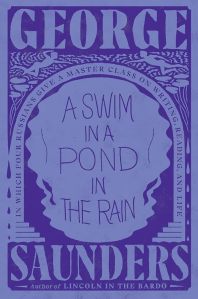
For over 20 years, George Saunders — perhaps America’s best living writer of short stories — has been teaching a course on the Russian short story to his MFA students at Syracuse University. A Swim in a Pond in the Rain is a distillation of that course, a guided tour in which Saunders takes your hands and introduces you to seven short stories written by the Russian masters of the craft in the 19th century.
A Swim in a Pond in the Rain is perhaps the best book on reading and writing I’ve ever encountered. Saunders’s love for these stories is absolutely infectious, and reading this book is like having your favorite English teacher excitedly introduce you to their favorite works of literature.
A Swim in a Pond in the Rain is a magnificent book — a wonderful collection of great literature, a technical writer’s manual, and a philosophical treatise on the nature of fiction and the importance of living well, all wrapped up in one.
The Uncontrollability of the World — Hartmut Rosa
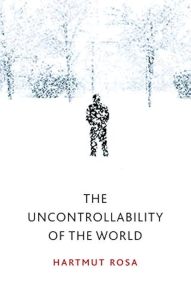
Hartmut Rosa’s The Uncontrollability of the World is a profound philosophical treatise and sociological diagnosis of the key question facing the modern world — If everything is better than it has ever been, why are we so stressed, depressed, and angry?
Hartmut Rosa, a German sociology professor, believes the source of our cultural malaise is the false promise of modernity — basically, the modern world promises us a controlled world, and yet it’s only through the uncontrollability of the world that we truly experience being alive and transformed. As such, we’re taught to approach the world as a series of objects (or, in Rosa’s words, “points of aggression”) meant to be conquered, optimized, or exploited. However, because the experience of being human can never be fully controlled or optimized, we will forever be in a state of anxiety, frustration, and constant striving over what we can never attain.
At 117 pages, The Uncontrollability of the World is a short read, but that doesn’t mean it’s a light read. If this small book gains enough traction, I reckon it’ll one day be viewed as the most acute diagnosis of modernity’s cost.
The Anxious Generation: How the Great Rewiring of Childhood Is Causing an Epidemic of Mental Illness — Jonathan Haidt
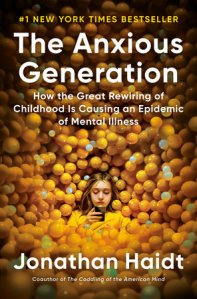
Jonathan Haidt’s The Anxious Generation is, simply put, one of the most important and vital works of nonfiction I’ve read, and—quite possibly—the most influential book on my wife and I’s parenting style and approach to technology.
The Anxious Generation is bombshell after bombshell detonating all of our preconceived assumptions about social media, Gen Z, parenting, “safetyism,” mobile phones, childhood, education, and mental health. In short, Haidt’s argument boils down to one salient point: We’ve overprotected our children from the real world and underprotected them from the virtual world. He advocates for a return to the “play-based childhood,” and points to the transition to the “phone-based childhood” as the primary driver of a significant increase in anxiety, depression, and self-harm among teenagers—especially teenage girls.
The best aspect of The Anxious Generation is how easy it would’ve been for Haidt to just document a series of social ills and offer a diagnosis. But the back half of this book is full of extremely practical steps, application points, and “rules” for ensuring your children don’t have their neurobiology hacked by tech companies who only want to monopolize their attention—mental health consequences be damned.
Nuclear War: A Scenario — Annie Jacobsen
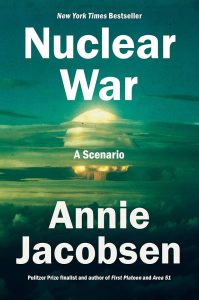
A minute-by-minute account of a potential general nuclear war scenario, Annie Jacobsen’s Nuclear War is one of the most dread-inducing and heart-pounding reading experiences I’ve ever had.
Beginning with the annihilation of Washington D.C. by a 1-megaton nuclear warhead, Nuclear War rewinds the clock a full 24 minutes to the moment North Korea unexpectedly launches an intercontinental ballistic missile with a trajectory aimed for somewhere in the United States. What follows is an account of “speculative narrative nonfiction” or “fictional nonfiction” as author Annie Jacobsen uses that postulated scenario to document the interplay between all of the various processes and policies that go into effect when the U.S. is under threat of nuclear attack—a scenario that leads, almost by accident, to a full-bore nuclear exchange with Russia.
The full breadth of Nuclear War‘s narrative unfolds in real time over 72 minutes—from the first missile launch to the end of human civilization. Intercutting between various government agencies, military personnel, public officials, submarines, satellites, silos, and ground zero impact zones, Nuclear War demands to be read in as few sittings as possible. Nuclear War is disturbingly prescient, paced like a thriller, and will stay with you for a long, long time.
In My Time of Dying: How I Came Face-to-Face with the Idea of an Afterlife — Sebastian Junger
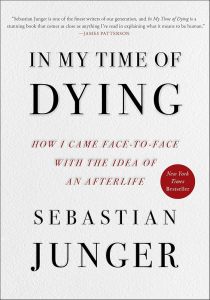
A revelatory, terrifying, and intimate exploration of death and what may come after, Sebastian Junger’s In My Time of Dying is a masterful blend of memoir, anthropology, science, and philosophy that dares confront the ultimate final frontier of existence.
In My Time of Dying is a very slim volume – only about 140 pages of actual text, and it recounts the author’s brush with something resembling an afterlife after he experienced an ultra-rare pancreatic aneurysm. Afterward, Junger — an ardent atheist — ruthlessly interrogates the validity of his experience through the lenses of religion, anthropology, neurobiology, and quantum mechanics
I don’t want anyone to get the wrong idea here. In My Time of Dying is not a Heaven Is For Real-like tale of conversion. As such, In My Time of Dying is an extremely emotionally intense read at times, and if you’re religious, it’ll probably force you to reckon with the likelihood that death is simply a threshold that leads to a self-annihilating void. At the same time, if you’re a straight-laced materialist who trusts only in what you can see and feel, get ready to have the possibility of some sort of existence beyond the veil made manifest in some surprising ways.
The Genesee Diary: Report From a Trappist Monastery — Henri Nouwen
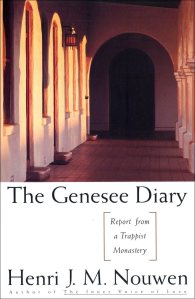
A quiet, thoughtful, and vulnerable account, The Genesee Diary is an illuminating and contemplative exploration of the monastic lifestyle of a man who spent seven months in a Trappist monastery.
Attempting to find a balm for his restlessness and feelings that he was living at an unsustainable pace, Nouwen received special permission from a Trappist monastery in upstate New York to join their order for seven months. Beginning in June 1974 and ending on the final days of Advent, Nouwen’s stay in the Abbey of the Genesee makes up the narrative of The Genesee Diary, which, as the title implies, is written in the form of a daily diary.
What is perhaps most special about The Genesee Diary is how self-aware Nouwen is about what he’s doing and why he’s doing it. The early days at the monastery are marked by an enthusiasm at “doing something new,” but as the weeks pass, Nouwen’s initial enthusiasm gives way to boredom and frustration, and then, finally, to transformation. Nouwen’s reckoning with his own ego and anger at the injustices in the world outside the abbey’s walls are some of the most piercing (and relatable) aspects of The Genesee Diary. But more than that, The Genesee Diary also offers a compelling day-by-day account of what committing oneself to a monastic lifestyle would actually look and feel like.
Empire of Pain: The Secret History of the Sackler Dynasty — Patrick Radden Keefe
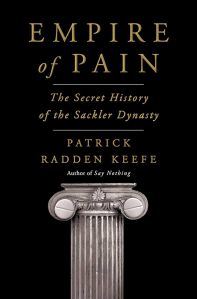
A gold standard in investigative journalism and narrative nonfiction, Patrick Radden Keefe’s Empire of Pain is a disturbing portrait of one family’s culpability in the deaths of over half a million Americans and a bracing dissection of the banality of evil and the various ways in which wealth can shield someone from the U.S. Justice System.
Empire of Pain is the story of the Sacklers, the family behind Purdue Pharma. Once known primarily for their philanthropic contributions to art museums and universities all over the world, the source of the Sackler’s wealth was rarely acknowledged in public circles — until people began dying en-masse from a little white pill called OxyContin.
I’ve read Patrick Radden Keefe’s previous work of narrative nonfiction, Say Nothing (about The Troubles in Northern Ireland), so I knew he was skilled at weaving propulsive narrative urgency with “can you believe this really happened?” investigative reporting, but Empire of Pain is a cut above. It reads like a season of HBO’s Succession, except instead of a media conglomerate, the family is at war over a pharmaceutical empire more efficient at killing than any serial killer.
The Fellowship: The Literary Lives of the Inklings — Philip and Carol Zaleski
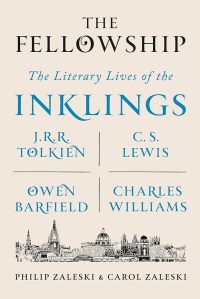
A magnificent multi-biography about a group of men who changed the course of literature, fantasy, and pop culture forever, The Fellowship brilliantly recreates the lives and times of Oxford’s Inklings.
In the first half of the 20th century, a group of professors, scholars, linguists, and writers regularly met in Oxford pubs and living rooms to drink, smoke, and debate religion and literary canon. They also read aloud from and critiqued each other’s works in progress. These men were the Inklings, and their gatherings produced such great works as The Lord of the Rings, The Chronicles of Narnia, The Hobbit, The Screwtape Letters, and Mere Christianity.
Liberally sourced from the Inkling’s own letters, diaries, autobiographies, and literary works, The Fellowship offers panoramic views of its subjects, and where it most succeeds (and the most riveting) is in its depiction of the behind-the-scenes creation (and critical and commercial response) of Tolkien’s Middle-earth magnum opus and Lewis’s apologetics and Narnia books.
Honorable Mentions (Nonfiction)
Some other nonfiction books I enjoyed this year include the KKK murder mystery, A Fever in the Heartland by Timothy Eagan; Adam Higgenbotham’s nuclear disaster narrative Midnight in Chernobyl; Lisa Traddeo’s strikingly intimate Three Women; Jon Krakauer’s investigative tour-de-force about college sexual assault, Missoula; Kyle Buchanan’s oral history on the making of Mad Max: Fury Road, Blood, Sweat, and Chrome; and The Reading Life, a collection of C.S. Lewis’s writings on the value of reading.
Disclaimer: As an Amazon affiliate, I earn a small percentage from qualifying purchases at no additional cost to you.

 Instrument of Mercy
Every year I read straight through your “Best Books I Read” list, collecting recommendations. This past year I read “This Is How You Lose The Time War” exclusively on your recommendation and I was blown away. Thanks so much for taking the time to write these up!
LikeLike